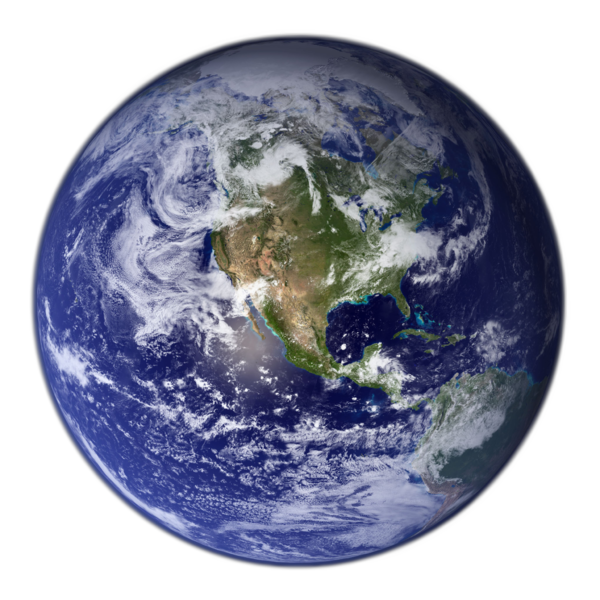
Earth is the third planet from the Sun and the only known planet in the universe with life.
It has a diameter of approximately 12,742 kilometers (7,918 miles), making it the fifth largest planet in the solar system.
Earth is composed mostly of iron, oxygen, silicon, and magnesium, and has a relatively thin atmosphere compared to other planets.
It takes Earth 365.24 days to complete one orbit around the Sun, and rotates on its axis once every 24 hours, giving us our day and night cycle.
Earth's atmosphere protects us from harmful radiation and space debris, and contains oxygen that is essential for life on Earth.
Earth has one large natural satellite, the Moon, which is the fifth largest moon in the solar system and the largest relative to its host planet.
It is estimated that Earth is about 4.54 billion years old, and life on Earth has existed for at least 3.5 billion years.
Earth has a magnetic field that protects it from solar wind, which is a stream of charged particles emanating from the sun.
Approximately 71% of Earth's surface is covered by water, and the remaining 29% is land.
Earth's climate is affected by various factors, including its distance from the Sun, its atmosphere, and the tilt of its axis, which causes the seasons.